Stanislav Andreev (Uncle Slava)
in Socionics and MBTI
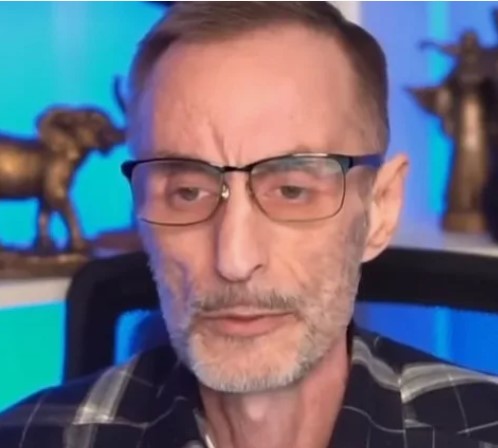
Stanislav Andreev (Uncle Slava)
Ethical Sensory Introvert
Socionics Type: Dreiser (Guardian)
MBTI Personality Type: ISFJ (Defender)
Base (worldview): Ethics of Relations
Creative (also strong): Volitional Sensing
Painful (most vulnerable): Intuition of Possibilities
Suggestive (expected from others): Pragmatic Logic
Temperament: Balanced-Stable (~Phlegmatic)
Communication Style: Warm
Quadra: Gamma (values: time and change, struggle and willpower, personal relationships, practice and application)

Same Personality Type

Representatives of sociotype Dreiser in socionics Representatives of sociotype Dreiser in socionics Representatives of sociotype Dreiser in socionics

Zemfira Ramazanova, Alexander Gordon, Andrey Makarevich, Sofia Rotaru, Vladimir Solovyov, Dmitry Gordon, Leo Tolstoy, Stanislav Andreev (Uncle Slava), Irina Shikhman, Vladimir Vinokur, Nadezhda Strelets, Marco Rubio, Viktor Yanukovych, Muslim Magomayev, Igor Krutoy, Iosif Kobzon

Sociotypes of 321 Celebrities

As of today, personality types in Socionics and MBTI have been identified for 321 famous people. The full list is available here, and you can also use the search:

Ethics of Relations

Relationships between people and managing them, family ties, friendships, morality, ethics, friendship, likes and dislikes, attraction and repulsion, love and hate, morality and immorality, compassion and heartlessness, decency, humanity, tactfulness, warmth, personal boundaries, conscience, upbringing, actions, attitude toward something, desires, empathy as understanding attitudes, etc.

Volitional Sensing

Influence, force, power, imposing one’s will, possession, space (from the standpoint of ownership, influence, danger, size, etc.), resources and money (from the standpoint of possession), wealth, pressure, punishment, conquest and defense, struggle, danger, safety, persistence, overcoming, achievement, territory, status, signs of influence, understanding volitional and force-related qualities, etc.

Intuition of Possibilities

The deep essence of phenomena, their hidden or implicit aspects, “looking around the corner,” multivariant thinking, synthetic thinking (seeing the whole through implicitly connected parts), seeing possibilities, variety, alternatives, originality, uniqueness, interest, novelty, inventions, ideas, insights, paradoxes, seeing the essence of a person, their abilities, potential, hidden sides of a person, etc.

Pragmatic Logic

Order and correctness of actions, application, practice, mastery and professionalism, work, abilities and skills, technologies, production, materials, tools, methods, facts, efficiency, usefulness, quality, use of objects, useful properties of objects, mechanisms and devices, interaction of mechanisms, money (from the standpoint of related actions), competitiveness, sales and purchases, income and expenses, prices, profit, etc.

Intuition of Time

Ongoing changes, the flow of time, events, how events will develop and how long they will take, history, present, past, future, how they are connected, necessary timing, dreams and fantasies, premonition, astrology, magic, rituals, the supernatural, art as captured time, etc.