Vladimir Putin
in Socionics and MBTI
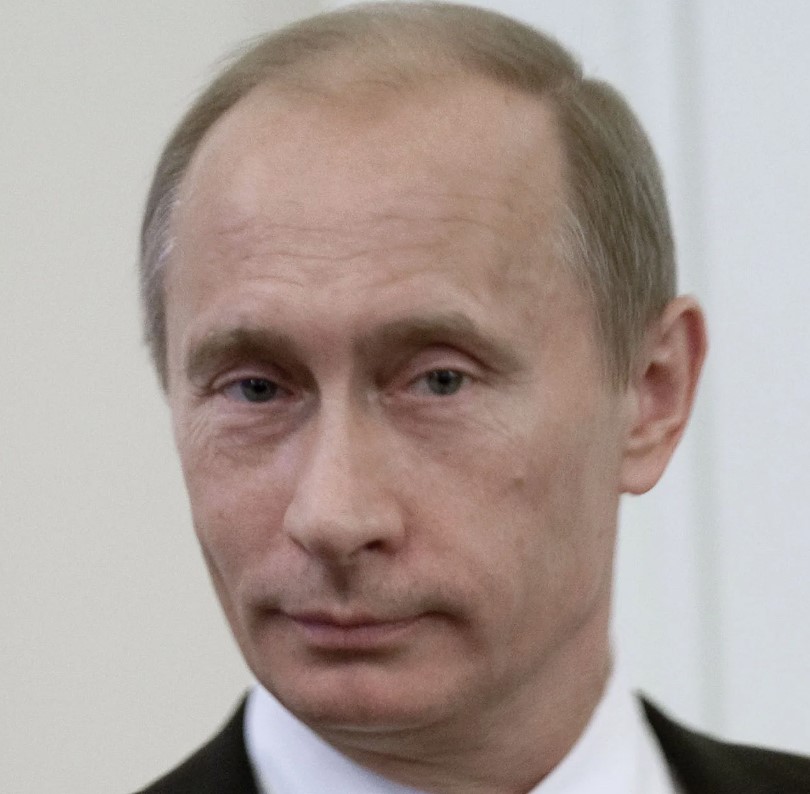
Vladimir Putin
Logical Intuitive Introvert
Socionics Type: Robespierre (Analyst)
MBTI Personality Type: INTJ (Architect)
Base (worldview): Structural Logic
Creative (also strong): Intuition of Possibilities
Painful (most vulnerable): Volitional Sensing
Suggestive (expected from others): Ethics of Emotions
Temperament: Balanced-Stable (~Phlegmatic)
Communication Style: Cool-Headed
Quadra: Alpha (values: ideas and possibilities, bodily sensations, emotions, learning and knowledge)

Description

More details about this person are described on the channel. He is the one responsible for what is happening in the country and at its borders. The issue is not Roskomnadzor, the General Staff, or other agencies. The system functions according to the qualities of its owner and manager.

In prolonged crisis situations, his vulnerable function also becomes especially noticeable: lack of willpower, spinelessness, indecisiveness, avoidance of responsibility, etc. This also explains the inability to monitor others' responsibility. Putin gives orders but does not ensure their execution. Because that requires the ability to apply pressure and punish. And that is his vulnerable function. Although many people see Putin as Maxim Gorky. But for that type, Force Sensing is the second strongest function, responsible for maintaining order (including ensuring that orders are carried out). How it works can be seen in Stalin (Gorky). Putin’s second strongest valued function, however, is Intuition of Possibilities (multivectorism, multipolarity, etc.).

The vulnerable function is also principled and stubborn — consequences of its inertia, low dimensionality, fears, and inflexibility. This means that when flexible and timely Force Sensing decisions are required, a person with vulnerable Volitional Sensing can become stubborn and ineffective, especially when others are the ones taking the real risks.

Same Personality Type

Representatives of sociotype Robespierre in socionics Representatives of sociotype Robespierre in socionics Representatives of sociotype Robespierre in socionics

Vladimir Putin, Pavel Durov, Artemy Lebedev, Ivan Usovich (stand-up), Ivan Alekseyev (Noize MC), Stanislav Drobyshevsky, Anton Chekhov, Nikola Tesla, Viktor Gulenko

Sociotypes of 321 Celebrities

As of today, personality types in Socionics and MBTI have been identified for 321 famous people. The full list is available here, and you can also use the search:

Structural Logic

Systems and their internal connections, analytical thinking (breaking things down to understand their internal links and structure), theory, studying theory, distinguishing what is primary from what is secondary, structure, analysis, cause-and-effect relationships, rules, laws, hierarchies, subordination, classifications, lists, tables, diagrams, formulas, terms and their definitions, programming, etc.

Intuition of Possibilities

The deep essence of phenomena, their hidden or implicit aspects, “looking around the corner,” multivariant thinking, synthetic thinking (seeing the whole through implicitly connected parts), seeing possibilities, variety, alternatives, originality, uniqueness, interest, novelty, inventions, ideas, insights, paradoxes, seeing the essence of a person, their abilities, potential, hidden sides of a person, etc.

Volitional Sensing

Influence, force, power, imposing one’s will, possession, space (from the standpoint of ownership, influence, danger, size, etc.), resources and money (from the standpoint of possession), wealth, pressure, punishment, conquest and defense, struggle, danger, safety, persistence, overcoming, achievement, territory, status, signs of influence, understanding volitional and force-related qualities, etc.

Ethics of Emotions

Emotional states, one’s own feelings and the feelings of others (joy, sadness, anger, fear, etc.), emotional influence, creating the necessary mood, expressing feelings, reading people’s emotions, subtle shades of emotion — the ability both to perceive and express them, acting, facial expressions, compassion, empathy as understanding emotional states, enthusiasm, etc.

Sensing of Sensations

Sensations from the nerve endings (smell, taste, sight, touch, etc.), the vital functioning of one’s own and other organisms, health, well-being, pain, bodily pleasures (food, drinks, relaxation, etc.), treatment, rest, aesthetics, beauty, harmony of colors and forms, comfort and convenience, weather, etc.